Recess Mood: One Brand, Two Products, Two Different Levels of Honesty
Photograph: Adobe Stock, licensed 20 August 2026. Lemon balm is an ingredient in Recess Mood; this is not the product.
Recess is the brand most people in this category have actually seen, because the cans are everywhere and they are very good looking. What almost nobody mentions is that Recess sells two quite different things, and only one of them tells you what is in it.
Recess Mood Powder: $30.00 for a 30-serving tub, $1.00 a serving. Also sold as stick packs, $30.00 for 15
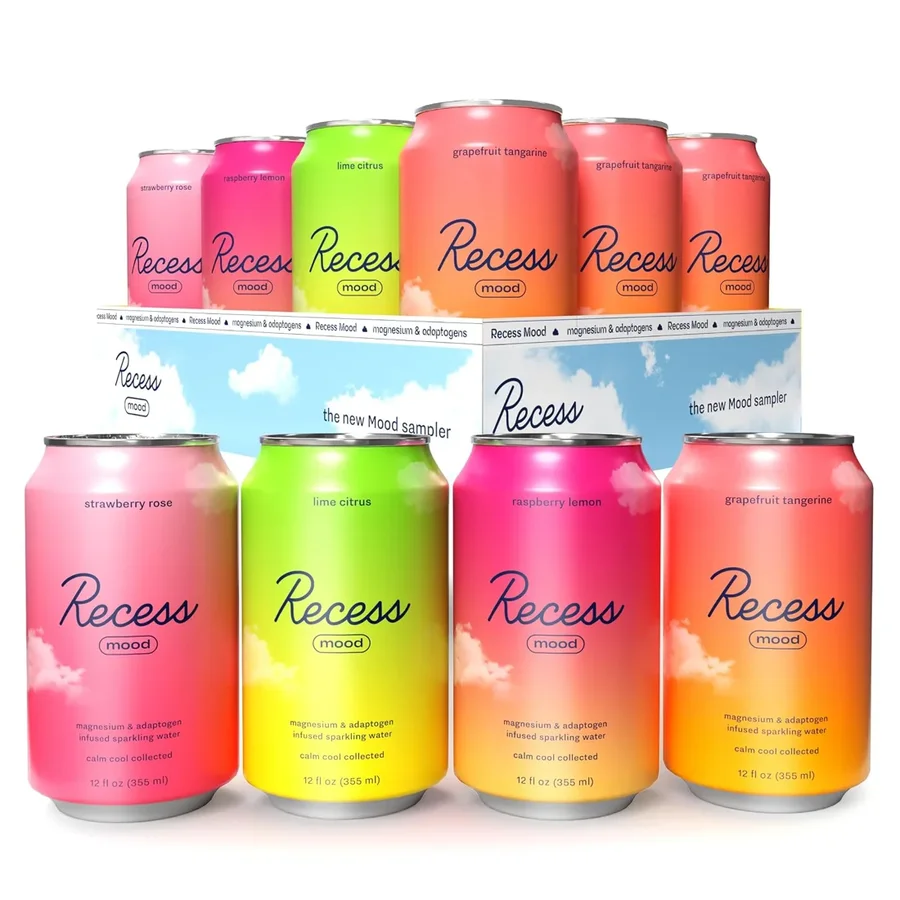
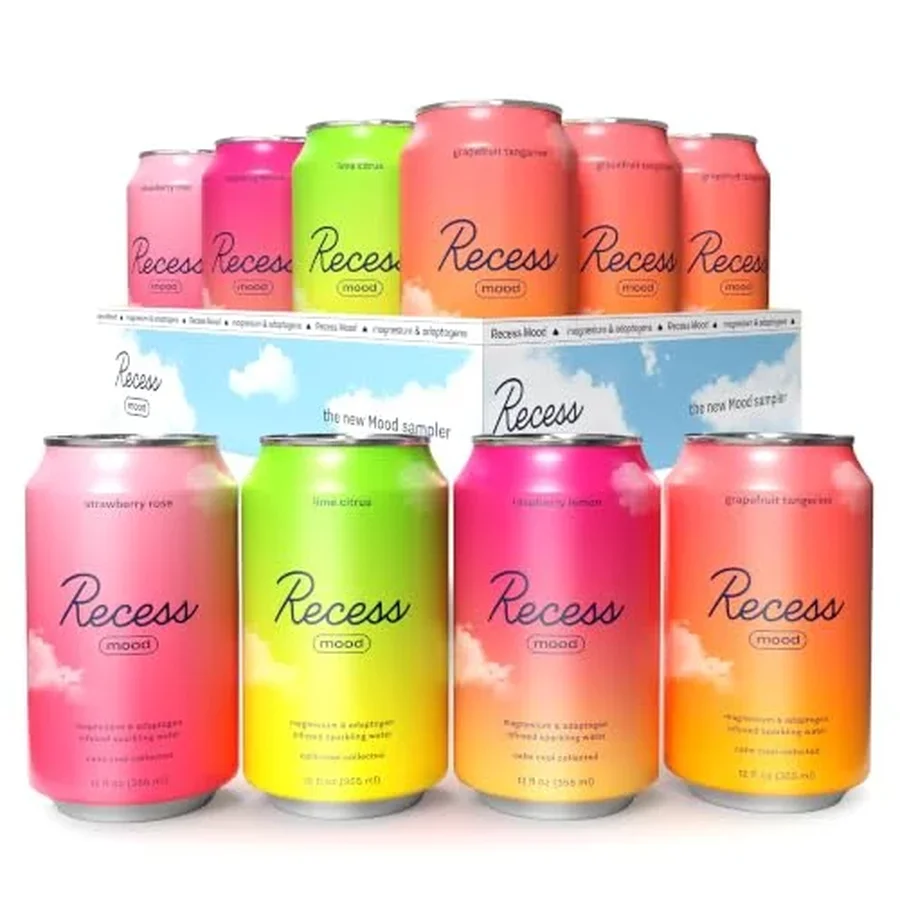
Recess Mood sparkling water: $36.00 for 12 cans direct, $32.97 on Amazon. $2.75 a can at the Amazon price
Caffeine: None in either
Powder publishes: L-theanine 200 mg, passion flower extract 180 mg, plus a proprietary magnesium blend
Can publishes: 53 mg of magnesium. Its L-theanine and lemon balm are named and never quantified
Disclosure tier: 1 for the powder, 2 for the can
The powder is the story
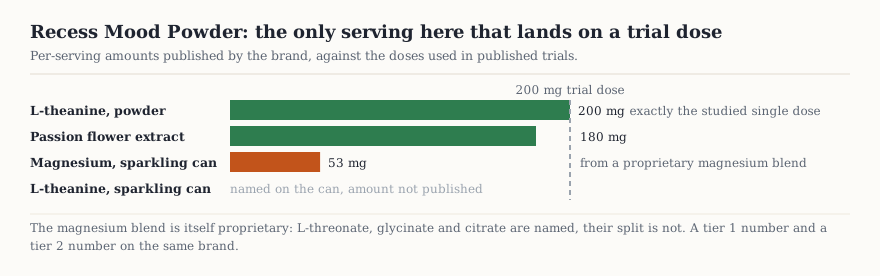
200 mg of L-theanine is not a number Recess arrived at by accident. It is the dose used in the acute stress work, printed on the label, at a dollar a serving. Across everything on this site, no other product publishes an amount that lines up with a published trial that precisely.
The 180 mg of passion flower is a real inclusion too, not a pinch. And there is no caffeine anywhere near it, which matters for a product whose whole job is to take the edge off.
The can is a tier lower, and it is worth knowing why
Recess Mood sparkling water publishes 53 mg of magnesium per can and names magnesium L-threonate, magnesium ascorbate and active vitamin B6 as the forms. That is more than most cans here manage.
But two things are left open. The 53 mg is the total from a proprietary magnesium blend, so the split between the three forms is not published, and magnesium L-threonate is the expensive one that the brand’s own marketing leans on. And the can’s L-theanine and lemon balm are named with no amount at all, on a product whose powder sibling publishes 200 mg on the front of the tub.
So the same brand will tell you the L-theanine dose in one format and not the other. That is the clearest evidence on this site that these numbers are a choice rather than a constraint.
What we like
No caffeine in either product. If you are drinking something at 9pm to wind down, this is the category where that should be obvious and mostly is not.
The powder is genuinely cheap for what it publishes. A dollar a serving for a disclosed 200 mg of L-theanine is better value than any can on this site, by a lot.
53 mg of magnesium is honest about being small. That is roughly an eighth of a day’s magnesium, and Recess does not pretend otherwise. The powder is where the real magnesium is.
What we do not
The can rides on the powder’s reputation. Most people buying Recess are buying the can, and the can is the less disclosed of the two.
“Proprietary magnesium blend” on a tier 1 product is a shame. Everything else about the powder’s label is exemplary. One bracket undoes part of it.
Recess also sells a Zero Proof line that is a different product entirely. Do not buy that expecting this. It is caffeinated, from guayusa, and it is built for a different moment.
Who should buy it
- Anyone who wants a published dose that matches a published trial: buy the powder
- People who want something functional in the evening with no caffeine at all
- Anyone who found the powders in this category unappetising and wants a can that is genuinely pleasant
Who should buy something else
- If cost per serving is the whole question, Four Sigmatic is 57 cents against a dollar
- If you want mushrooms specifically, there are none in either Recess product
Verdict: Buy the powder. It is the only serving on this site that publishes an amount matching the trial it borrows from, and it costs a dollar. The can is a good drink and a tier-2 label, and if you are buying Recess for the dose rather than the fridge, you are buying the wrong one.